
Educational institutions are now expected to
- Establish structured and continuous mental-health systems
- Ensure proactive identification and intervention, not only post-incident response
- Maintain documented, verifiable evidence of actions taken
Policies, circulars, and statements of intent are no longer sufficient. Institutions are assessed on systems, processes, and records.
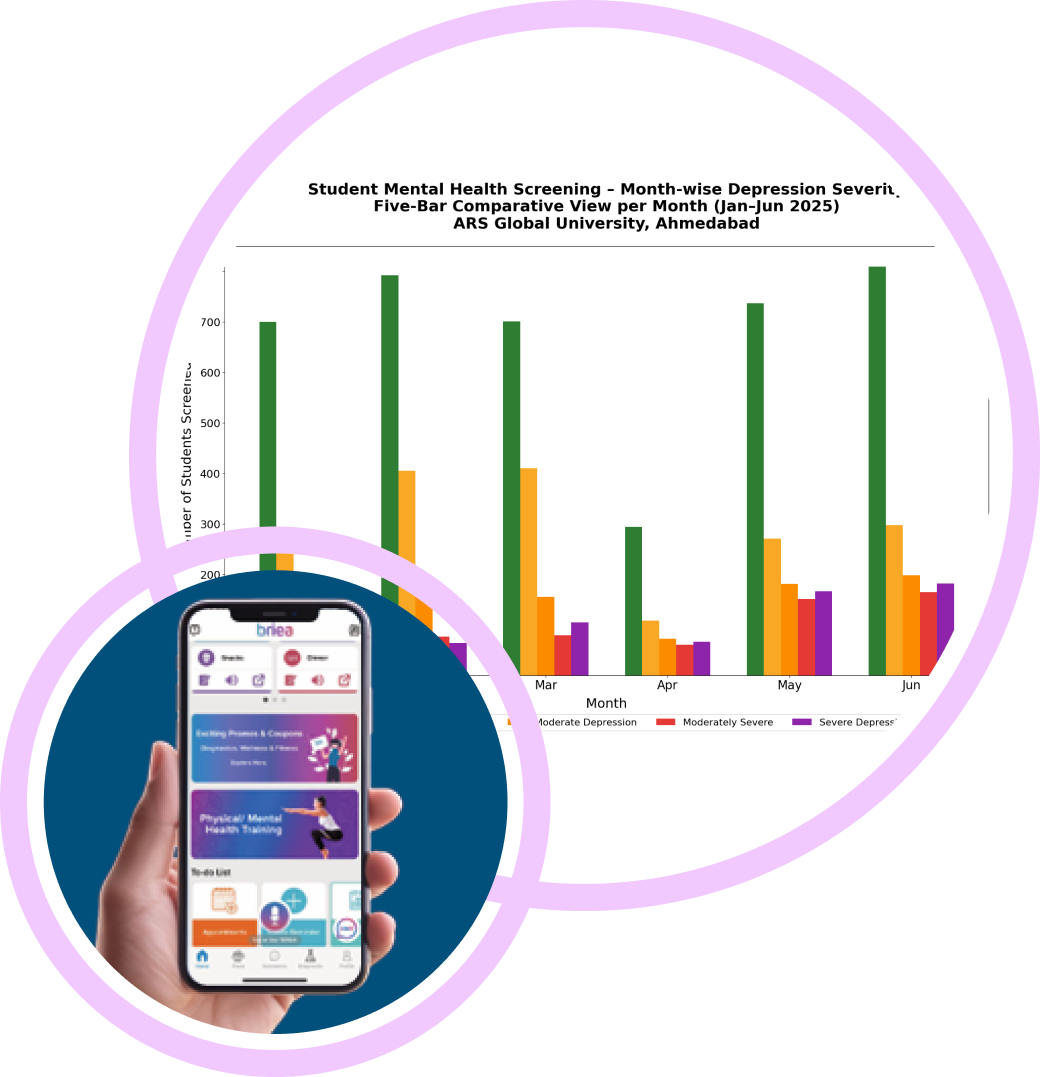
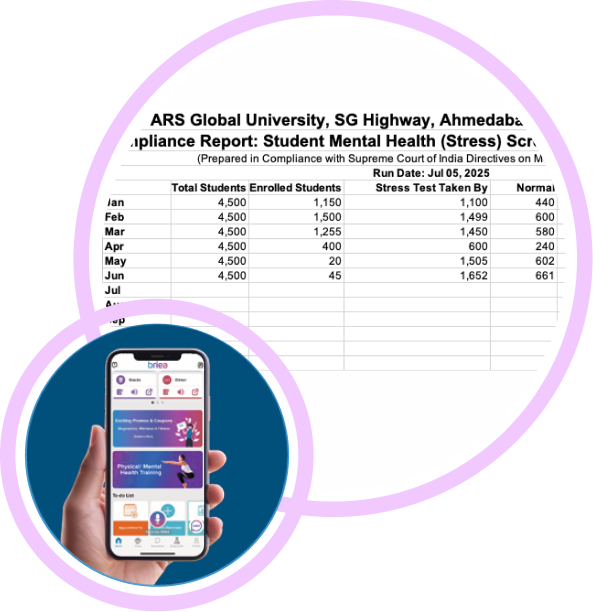
What Briea Is
Briea’s Student Mental Health Compliance System is a ready-to-operationalise institutional system that enables colleges and universities to meet Supreme Court expectations with demonstrable evidence, not post-facto explanations.
Download Brochure PDF
WHAT THE SUPREME
COURT EXPECTS
By its judgment dated 25 July 2025, the Supreme Court of India has issued binding guidelines that materially alter how educational institutions are expected to approach student mental health.
The Court has made it clear that student mental health is not a discretionary welfare concern, but a matter of institutional duty of care, requiring structured systems, proactive action, and demonstrable oversight.
What Institutions Are Now Expected to Demonstrate
From the judgment and its operative directions, institutions are expected to ensure that:

Mental-health support is continuously available to students, and not limited to office hours, occasional visits, or symbolic arrangements.

Structured, institutional mechanisms exist, rather than informal or ad-hoc responses dependent on individuals.

Preventive and proactive engagement is undertaken, so that risks are identified before crises occur.

Clear institutional accountability is established, instead of diffused responsibility across counsellors, faculty, or committees

Escalation, response, and follow-up mechanisms are defined and consistently applied.

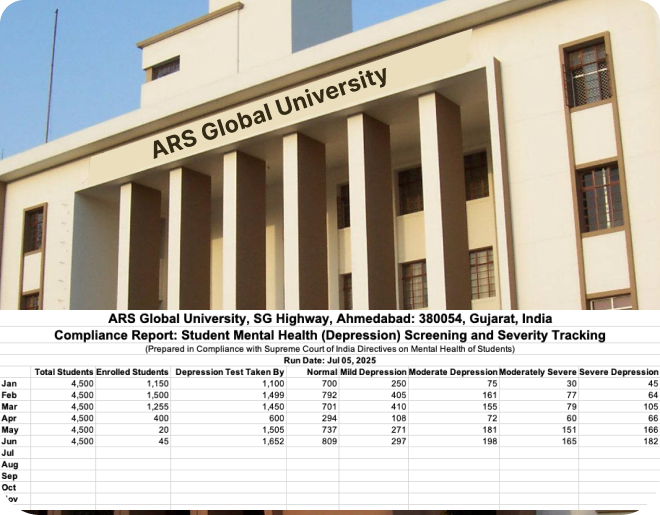
Records, reports, and monitoring exist to demonstrate what actions were taken and when.
The Court’s emphasis is clear: Intent is not examined. Evidence is.
How Institutions Are Assessed After Serious Incidents
After a serious student mental health incident, institutions are not assessed retrospectively on compassion or concern
They are examined on questions such as:
- What system existed for students to access help on an ongoing basis?
- Were there mechanisms to identify distress or risk proactively?
- Who, at the institutional level, was responsible for oversight?
- What actions were taken before the incident occurred?
- Can these actions be demonstrated with contemporaneous records?
The absence of records is treated as absence of systems.
Where Most Colleges Are Exposed Today
Despite good intent, most colleges continue to rely on:
- Visiting or part-time counsellors
- Limited office-hour availability
- Faculty observation and informal referrals
- Circulars, posters, and helpline numbers
- Explanations prepared after incidents
These arrangements typically fail scrutiny because they do not demonstrate:
- Continuity of access
- Proactive institutional engagement
- Defined escalation and follow-up
- Leadership-level oversight
- Time-stamped evidence over sustained periods
As a result, institutions struggle to show that they exercised reasonable and continuous duty of care, even when efforts were made in good faith.
HOW BRIEA MEETS SUPREME COURT EXPECTATIONS
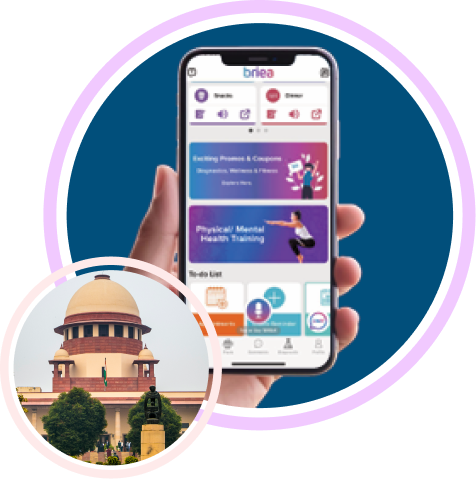

Supreme Court Expectation 1: Continuous access to mental-health support
How Briea Enables This
- Android and iPhone applications for students
- WhatsApp-based access for low-friction reach
- 24×7 availability, independent of office hours or faculty presence
Compliance Outcome
Students always have access. Availability is continuous and demonstrable.
Supreme Court Expectation 2: Structured systems, not informal arrangements
How Briea Enables This
- Institution-wide deployment
- Defined engagement cycles
- Centralised operational logic instead of individual discretion
Compliance Outcome
Mental-health responsibility is institutionalized, not ad-hoc

Supreme Court Expectation 3: Preventive and proactive measures
How Briea Enables This
- Voice-first AI proactively engages students
- Regular check-ins identify stress, disengagement, and risk early
- Students are supported even when they do not self-report
Compliance Outcome
The institution acts before crises, not only after complaints.

Supreme Court Expectation 4: Clear escalation and follow-up
How Briea Enables This
- Structured escalation pathways for moderate and high-risk indicators
- Follow-ups tracked until resolution or referral
- No reliance on informal memory or one-time interactions
Compliance Outcome
Institutional response is consistent, traceable, and defensible.

Supreme Court Expectation 5: Evidence of action and accountability
How Briea Enables This
Time-stamped records of:
- Student engagement
- Proactive outreach
- Risk identification
- Follow-up actions
Records are generated as events occur, not reconstructed later
Compliance Outcome
Students always have access. Availability is continuous and demonstrable.

INSTITUTIONAL OVERSIGHT, DEFENSIBILITY & DECISION
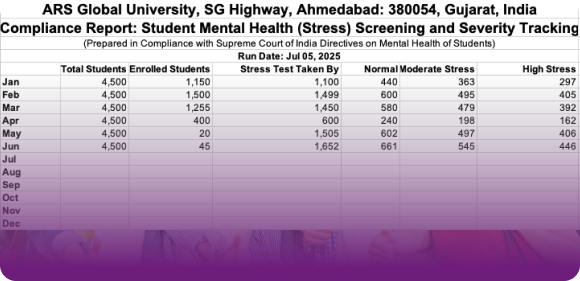
Briea provides a dedicated Control Panel for Colleges, enabling:
- Central visibility of student engagement trends
- Risk indicators and escalation summaries
- Period-wise compliance reports
- Fast, factual response to notices or inquiries
This allows Principals, Registrars, and Management to exercise documented oversight, not assumed supervision.
While compliance is primary, Briea also delivers:
- Ongoing mental-health, stress, and habit-control support
- Lifestyle, fitness, and preventive-health nudges
- Affordable diagnostics and health support for families
- Reduced anxiety for students and parents
The Leadership Decision
Every institution now faces a clear choice:
Rely on intent, individuals, and explanations
OR
Implement a continuous, Supreme Court-aligned compliance and evidence framework
Next Step:A short Management-level discussion to review institutional readiness and framework implementation